

WELCOME TO LENS REFLEX
@upcoming_popstar
We are all told, “live your life to the fullest”; I am here to do just that LENS REFLEX serves as a vessel to project my passions, and clue in my loyal readers as to what inspires me in this crazy world. So, sit back, relax, and read on.

WHAT BRINGS ME HERE
ONLY WITH PASSION.
What is it that fuels you? For me, it’s PHOTOGRAPHY. I love writing about my passions, what interest me, what interests others, and sharing all of my thoughts with my readers.
LENS REFLEX is truly my own little passion project, gaining more and more traction each day. I hope you enjoy browsing my site and all of the unique content I have to offer. Take a look around; perhaps you’ll discover what fuels you as well. Read on and enjoy!
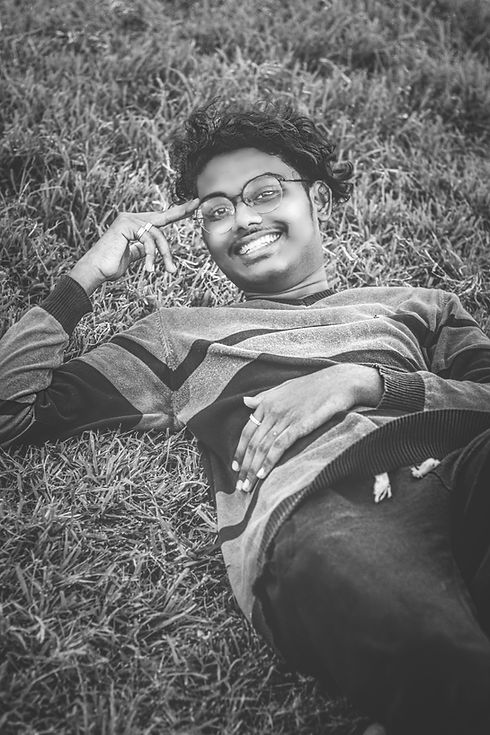

WHAT IS PHOTOGRAPHY
read on
Photography is the art, application and practice of creating durable images by recording light or other electromagnetic radiation, either electronically by means of an image sensor, or chemically by means of a light-sensitive material such as photographic film. It is employed in many fields of science, manufacturing (e.g., photolithography), and business, as well as its more direct uses for art, film and video production, recreational purposes, hobby, and mass communication.

NEED OF PHOTOGRAPHY
Photography Helps Capture Memorable Occasions
The first and most common use of photography is to capture important events for future references. This is a common practice to the point that everyone having an important event wants to include a few pictures to make sure they can look at the photos in the future to refresh their memories of the great events they held. Even before the video systems came into place, photographs were very popular. Major historical moments have been documented by photographs.
Most People Use Photography to Inspire or To Evoke Inspiration among Others
There is a common saying that pictures speak a million words. This statement has many meanings to different people. Whether it is in lecture halls in universities across the world or just at the local social hall, educators use photos to better explain their points. Illustrations help students understand things better and there is no better method of illustrating ideas than by using photos and in the current world, videos.
Photography also has different genres and that is why even photographers specialize in different types of the art. You will find portrait photographers, landscape photographers and still life photographers just to mention a few. People who love nature often take photos of different things in life such as trees, mountains, rivers and many other important natural features of the world. Other people who see photos from other places get the inspiration and urge to visit the same places with the hope of experiencing the beauty they have seen in the photos.
When people visit art galleries, they have a general idea of what to expect. It is however interesting to observe the reactions of different people when they see one great photograph. Because photography inspires people in different ways, you will notice different reactions depending on the kind of inspiration each person derives from the photo. Upon realizing this fact, some galleries have different sections dedicated to certain kinds of photography.
1.EXPOSURE
WHY IT IS SO CRUCIAL?
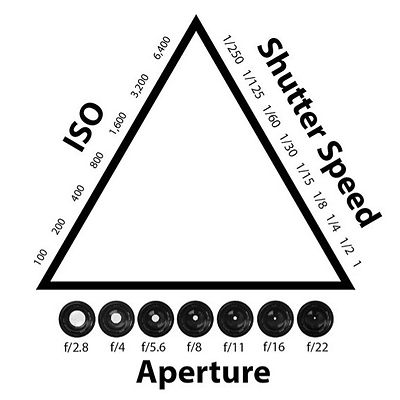
Exposure is how light or dark an image is. An image is created when the camera sensor (or film strip) is exposed to light—that’s where the term originates. A dark photo is considered underexposed, or it wasn’t exposed to enough light; a light photo is overexposed or exposed to too much light. Exposure is controlled through aperture, shutter speed and ISO.
2.APERTURE
WHOLE IN A HOLE
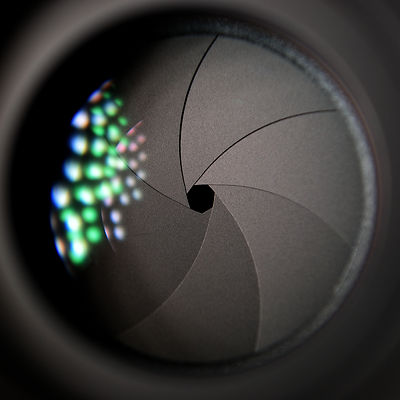
This is the first common photography term you should learn. Simply put, aperture is the size of the opening in the lens. Think of the lens as a window—large windows or wide angles let in more light, while small windows let in less light. A wide open aperture will let more light into the image for a brighter photo, while a smaller aperture lets in less light. Aperture is measured in f-stops; a small f-stop like f/1.8 is a wide opening, a large f-stop like f/22 is a very narrow one. Aperture is one of three camera settings that determine an image’s exposure, or how light or dark it is. Aperture also affects how much of the image is in focus—wide apertures result in that creamy, unfocused background while narrow apertures keep more of the image sharp.
3.ASPECT RATIO
RATIO FACTOR

If you’ve ever printed images before, you’ve probably noticed that an 8 x 10 usually crops from the original image. That’s due to aspect ratio. Aspect ratio is simply the ratio of the height to width. An 8 x 10 has an equal aspect ratio to a 4 x 5, but a 4 x 7 image is a bit wider. You can change the aspect ratio in your camera if you know how you’d like to print your image, or you can crop your photo when you edit it to the right ratio.
4.BOKEH
OUT OF FOCUS

Bokeh is the orbs created when lights are out of focus in an image. It’s a neat effect to have in the background of a photo, created through wide apertures. It will have an interesting effect on your image quality.
5.BURST MODE
MULTIPLE SHOTS

You can take photos one at a time. Or, you can turn the burst mode on and the camera will continue snapping photos as long as you hold the button down, or until the buffer is full (which is a fancy way of saying the camera can’t process anymore). Burst speeds differ based on what camera or film camera you own, some are faster than others. Just how fast is written in “fps” or frames (pictures) per second. This will give you a wide selection of which close-up you’ll ultimately select of your dog!
6.DEPTH OF FIELD
LOOKS
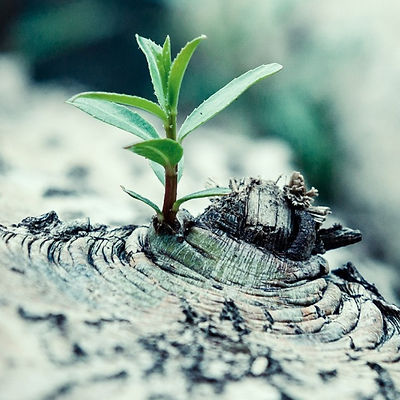
Depth of field is a photography term that refers to how much of the image is in focus. The camera will focus on one distance, but there’s a range of distance in front and behind that point that stays sharp—that’s depth of field. Portraits often have a soft, unfocused background—this is a shallow depth of field. Landscapes, on the other hand, often have more of the image in focus—this is a large depth of field, with a big range of distance that stays sharp.
7.DIGITAL VS OPTICAL
DIFFRENCE
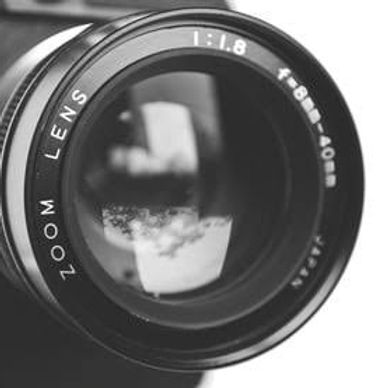
Digital and optical are important terms to understand when shopping for a new camera. Digital means the effect is achieved through software, not physical parts of the camera. Optical is always better than digital. These terms are usually used when referring to a zoom lens (on a compact camera) as well as image stabilization.
8.EXPOSURE COMPENSATION

I believe you must bring your whole self to the table if you want to thrive in today’s crazy world; your personality, your sense of humor, and most importantly, your heart. All of these elements brought me to found LENS REFLEX back in 2000. Since then, the blog has been thriving, and has quickly gained a loyal following. I invite you to explore my site, learn about my passions, and explore what excites and interests you as well.
ISO
MAIN aspect

ISO is one of the three pillars of photoWhat is ISO?
In very basic terms, ISO is simply a camera setting that will brighten or darken a photo. As you increase your ISO number, your photos will grow progressively brighter. For that reason, ISO can help you capture images in darker environments, or be more flexible about your aperture and shutter speed settings.
However, raising your ISO has consequences. A photo taken at too high of an ISO will show a lot of grain, also known as noise, and might not be usable. So, brightening a photo via ISO is always a trade-off. You should only raise your ISO when you are unable to brighten the photo via shutter speed or aperture instead (for example, if using a longer shutter speed would cause your subject to be blurry).graphy (the other two being shutter speed and aperture), and it has a major effect on your images. How does camera ISO affect your images? In this article, we will introduce ISO for beginners and explain how to use it effectively for the best possible results.
What is the Meaning of ISO?
The acronym ISO stands for “International Organization for Standardization”. However, camera ISO does not directly refer to the organization that creates various technology and product standards. Ever since two film standards called ASA and DIN were combined into ISO standards in 1974 (later revised for both film and digital photography), they were referred to as one word “ISO” from that point on. Although ISO initially defined only film sensitivity, it was later adopted by digital camera manufacturers with the purpose of maintaining similar brightness levels as film.
Common ISO Values
Every camera has a different range of ISO values (sometimes called ISO speeds) that you can use. A common set is as follows:
ISO 100 (low ISO)
ISO 200
ISO 400
ISO 800
ISO 1600
ISO 3200
ISO 6400 (high ISO)
Quite simply, when you double your ISO speed, you are doubling the brightness of the photo. So, a photo at ISO 400 will be twice brighter than ISO 200, which will be twice brighter than ISO 100.

Deepak
Thanks for your interest in LENS REFLEX For more information, feel free to get in touch and I will get back to you soon!
www.instagram.com/upcoming_popstar